
EMDR Intensives for Complex Trauma in Houston TX & Online
Focused, carefully paced trauma healing in days instead of months.
Some things don’t fit neatly into the 50 minute hour…
If you’ve been in therapy for a while, you probably know the feeling of finally getting settled and into the good, deep work just in time for your session to come to an end. For a lot of people with complex or developmental trauma and attachment wounds, 50 minutes just isn’t enough time to get the work done. Each session can feel like starting over again and again with little real progress being made on a deeper level.
Therapy intensives offer us a different kind of space where we don’t have to rush through the work. Instead, we get to spend an extended amount of time helping you feel safe, open up, and heal the core wounds you’ve been carrying for so long.
What Is an EMDR Intensive?
EMDR (Eye Movement Desensitization and Reprocessing) is a well-researched trauma therapy that helps the brain reprocess painful experiences, so they feel less present and less powerful.
In EMDR, the reprocessing phase is where the deepest healing happens, but in a typical 50-minute session, a lot of the hour goes to checking in, grounding, and settling into the memory. We often have to stop just as processing is gaining momentum.
An intensive removes that constant start-and-stop. With extended and uninterrupted blocks of time, we can stay in reprocessing longer, follow the work wherever it needs to go, and move through more material in just a few days instead of months.
Because we are not rebuilding momentum every week, intensives can shorten overall treatment time and allow us to process trauma more quickly than we can in 50-minute sessions.

What Clients Often Experience
Everyone's healing is different, and I cannot promise a specific outcome. But, many of the clients I work with describe changes like these:
Walking away from relationships that only give you crumbs, because you finally know you deserve more
Letting someone love you well without waiting for the other shoe to drop
Getting triggered, noticing it, and finding your way back to yourself in minutes instead of days
Walking into a family gathering as the person you are now, not the role you played as a kid
Saying no without the guilt spiral, and saying yes because you want to, not because you are afraid
A quiet evening at home that feels peaceful instead of lonely or tense
Many clients describe feeling lighter, more like themselves, and more able to live by what matters to them now rather than by what they learned in order to survive. Change often continues to unfold in the weeks after an intensive as your system integrates, which is why follow-up support is part of the process.
Who is A Good Fit For an Intensive?
You may be a good fit for an EMDR intensive if you:
Carry the effects of childhood or developmental trauma, including neglect, emotional abuse, or growing up in a chaotic or unsafe home
Struggle with attachment wounds that show up in your relationships, your sense of worth, or your ability to feel safe with others
Have done insight-oriented therapy but still feel stuck in old patterns
Want to work more deeply than weekly sessions allow
Have a limited schedule, live outside Houston, or prefer to concentrate your healing into a defined window of time
If you have a more contained trauma history, a shorter one-day intensive may be all you need.
Why an Intensive Might Not Be Right For You (Yet)
You may want to consider starting with weekly sessions if you:
Have concerns about substance use and are using in a way that could interfere with processing
Are struggling with an eating disorder that significantly restricts the calories you are consuming, as this can impact your ability to reprocess material effectively
Are struggling with suicidal thoughts or self-harming behaviors. I want to make sure you stay safe and have the resources you need before we jump into an intensive experience
Aren’t ready to dive deep into your trauma experiences. Sometimes we need weekly sessions first to help you get ready for the intensive
If you’re unsure about whether or not you’re ready for an intensive, please reach out for a consult call and we can figure out what makes the most sense for you.

Why Choose a Therapy Intensive?
Weekly therapy has some real limits when it comes to complex trauma work. In a 50-minute session, a meaningful chunk of time goes to checking in and getting back to where we left off, and then slowing back down and helping you prepare to leave. That often leaves a much smaller window for the deep processing itself, and just as it starts to open up, it's time to stop.
An intensive removes that stop-start rhythm, and instead of 20 or 30 minutes, we get hours of un-interrupted time. That means:
Less time spent getting started, and more time spent actually doing the work
Space for your nervous system to move all the way through a reprocessing cycle instead of pausing mid-way
Room to work with more than one part, memory, or pattern in a single sitting, when that's appropriate
A concentrated timeline, which can mean significant change in days instead of months
The ability to fully prepare beforehand and fully integrate afterward, instead of processing in fragments
Intensives give us the space to let your brain and body move at it’s pace and move more fully into focused processing and healing.
My Approach: EMDR + IFS, Integrated
In my work with complex trauma, I bring together two approaches that support different layers of healing.
EMDR (Eye Movement Desensitization and Reprocessing) helps your nervous system reprocess painful memories and experiences that are “stuck”. As that happens, the beliefs that formed around them, like "I am not safe," "I am not enough," or "it was my fault," stop feeling so intense. EMDR helps you let go of old beliefs that no longer serve you so you can make room for ones that feel truer to who you are now.
IFS (Internal Family Systems) helps us honor the different parts of you that developed to protect you. That might be the parts that stay guarded, people-please, shut down, or hold everything together. Rather than pushing past these parts to get to the "real" trauma work, we build a relationship with them first, so they aren’t fighting the process.
Together, this means we do not just push through and force processing a memory. We make sure the parts of you that have been protecting you are on board and feel safe enough to let it happen. This can make the work more effective and less overwhelming than EMDR or parts work alone. Throughout our intensive, pacing, consent, and stabilization are prioritized, and you stay in charge of how deep we go.
What a Therapy Intensive Includes

Every intensive package includes three phases:
1. Consultation (30 minutes)
The first step is a free consultation to get to know each other and decide if an intensive is right for you. In the consultation, we’ll discuss your trauma history and goals for the intensive. I’ll ask some questions to get to know a little more about you, and then answer any questions you have about myself or the intensive process. If we decide we’re a good fit for each other, we can book the intensive after the call!
2. Pre-Intensive Session (90 minutes)
Before the intensive itself, we’ll meet for an extended session to get ready. This is where we talk through your history in detail, identify what we'll focus on, and make sure you feel resourced and prepared going in. You'll also complete a preparation workbook beforehand, which will help you reflect on what's bringing you to this work, and give me a detailed understanding of your history and current struggles so we can use our time together as efficiently and meaningfully as possible.
3. Intensive Day(s) (time varies)
This is where we get to dive into the real work. We’ll have extended, uninterrupted time where we do the deep processing that weekly therapy doesn't have room for. Depending on your package, this may be a single focused day or spread across several sessions. We’ll move at a pace that respects your window of tolerance, to ensure we are getting meaningful processing done without overwhelming your system.
4. Post-Intensive Session (90 minutes)
About two weeks after your intensive, we’ll meet again to help you integrate what came up, notice what's changed, and talk through what ongoing support (if any) makes sense from here. Healing doesn't stop when the intensive ends, and this session helps us make sure you feel supported through every step of it.
Intensive Options
One-Day Intensive
Best for: Specific incidents, single-event trauma, or a less complex trauma history. This is for people who want to focus on one clear target.
Format:
90 minute pre-intensive session
6 hours in one day, broken into two 3 hour sessions with a break in between
90 minute post-intensive session
Investment: $1,620
Three-Day Intensive
Best for: A layered trauma history, such as several related experiences or a painful relationship pattern. This is for you if you want to focus on a few connected themes.
Format:
90 minute pre-intensive session
6 hours per day over three consecutive days, with breaks built in for lunch
90 minute post-intensive session
Investment: $3,780
Five-Day Intensive
Best for: Complex, developmental trauma and attachment wounds, where deeper preparation, more time with protective and vulnerable parts of you, and room for integration matter most.
Format:
90 minute pre-intensive session
6 hours per day over five consecutive days, with breaks built in for lunch
90 minute post-intensive session
Investment: $5,940
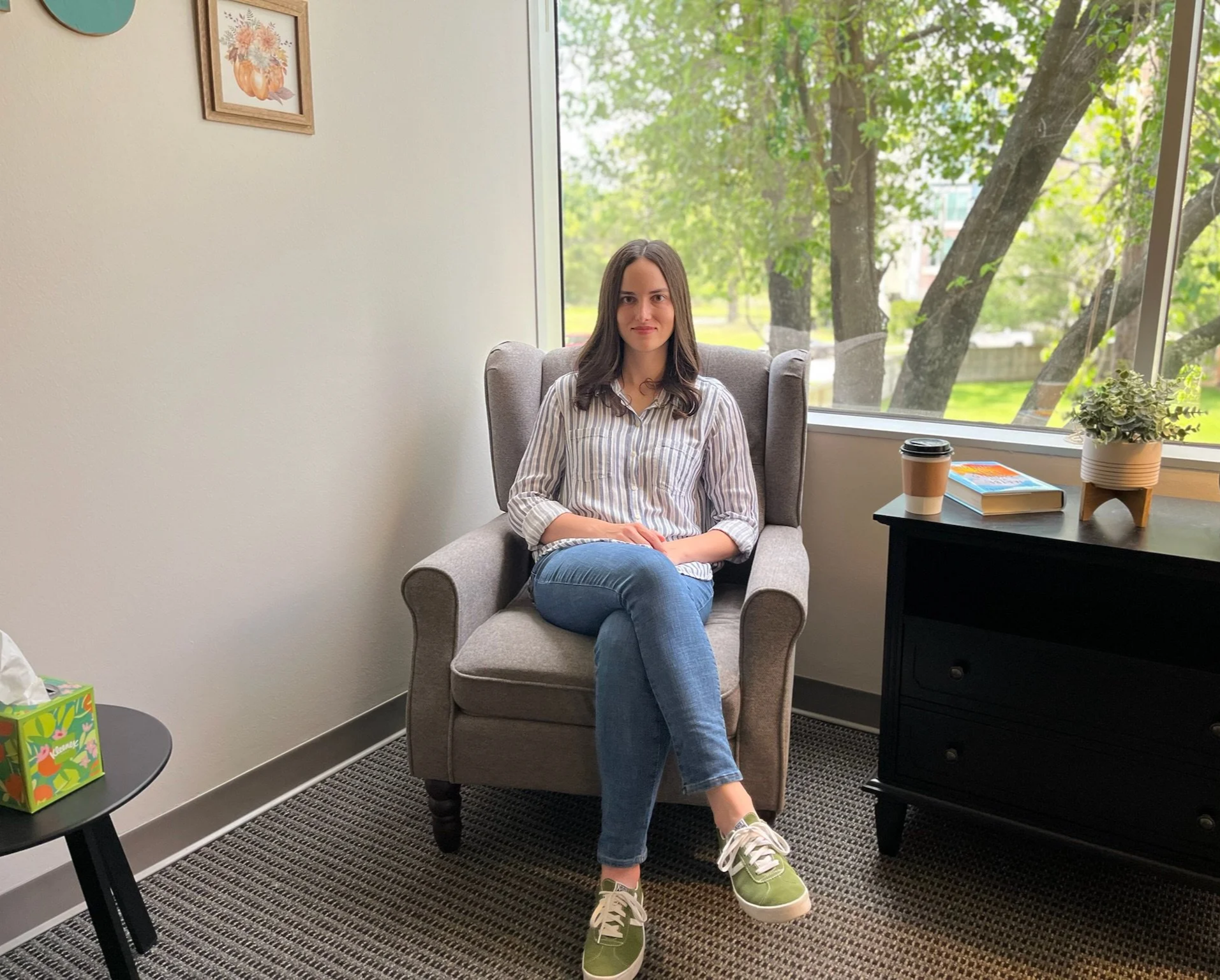
Why Work With Me?
Intensive work asks you to trust someone with your deepest hurts and darkest moments. I want to make sure you can trust the person you’re working with. To help build that trust, here’s a bit about my qualifications and training:
Licensed in Texas and Colorado as a Licensed Professional Counselor - Texas LPC 90693 Colorado LPC.0022277
Trained in EMDR
Completed extensive training and supervision on working with complex trauma and dissociation
Completed IFS training through Syzygy and the IFS Institute Circle program
Experience with trauma and family-of-origin work, which sits at the heart of developmental and attachment wounds
A preparation-first approach, where your pacing, safety, and consent shape every step
Personal, one-on-one care, from your first consultation through integration
FAQs
-
I prefer to hold intensives in person at my office in Houston. Sharing the same room adds a layer of connection, presence, and depth that can be harder to reach through a screen, and I want to provide you with the best experience possible.
That said, virtual intensives are available when travel is not possible. If you choose that option, we will plan together for what will help you feel safe and supported, including your space, your privacy, and how you will care for yourself afterward.
-
Intensives are private pay, and I do not bill insurance directly. Because they are built around extended blocks of dedicated time, they are offered at a set fee for each option rather than billed session by session.
If you would like to use health benefits, HSA and FSA funds may be an option. Check with your specific provider to ensure they cover therapy intensives.
-
It depends on what you are hoping to work on and how many layers are involved.
A one-day intensive tends to fit a specific incident, a single-event trauma, or a less complex history, where we can focus on one clear target.
A three-day intensive is often a good fit for more layered experiences and a few connected themes.
A five-day intensive is designed for complex, developmental trauma and attachment wounds that call for deeper preparation and more room to integrate.
More days is not automatically better. The right fit matches what you are carrying and what your system can comfortably handle.
During your consultation, we will talk through your history and goals, and I will give you my honest recommendation.
-
Some clients are able to complete reprocessing and reach all of their treatment goals after one intensive.
Others choose to return for another round later, or transition into weekly therapy to continue the work at a different pace.
During your post-intensive session, we’ll talk about the progress you made, and what goals, if any, may still need ongoing work. At that point we can figure out what kind of support makes the most sense for you moving forward.
-
Nope! Intensives are open to new clients as well as clients I'm already seeing weekly.
-
Part of my job during the intensive is to track your emotional responses and keep you within your window of tolerance. If we start to notice you’re getting overwhelmed, we’ll back off, take time to regulate, and slowly ease our way back in.
If you are someone who experiences dissociation, we’ll carefully pace our work to try to avoid dissociation during reprocessing. If this applies to you, we will talk more about what that looks like and create a plan specific for you in our pre-intensive session.
-
My approach to EMDR is the same, but the format is concentrated. Longer sessions on consecutive days allow us to stay with the work without stopping and restarting each week. This lets us process for extended periods, so we can accomplish deeper work in a shorter period of time
It can help to think of it like this:
Weekly sessions are like wading into the water for an hour. Just as you adjust to the temperature and find your rhythm, it is time to step back out and dry off for the week. An EMDR intensive lets you immerse yourself fully. We can wade into the water, get acclimated, and start diving deeper than before. No more wasting stopping, getting out, and then reacclimating again.
Ready to Learn More?
If you are curious whether an EMDR intensive is right for you, I would be glad to talk it through with you. Schedule a free consultation, and we will explore your options.